How the generator works
- Add the child's first name and age, plus a town if you want it mentioned.
- List one to three things they did well this year. The smaller and more specific, the better.
- Add one thing to keep working on if you want a gentle nudge, then any wish-list items, pets or siblings.
- Choose a tone and a sign-off.
- Generate the letter, then print it on one of three free stationery designs or copy the text.
The result is 120–220 words, which fits a single page with room for a signature. The letter never promises a specific gift; Santa can acknowledge a wish list without confirming what is under the tree.
What makes a Santa letter believable
Specifics, not adjectives. “You helped your brother find his boots on the morning we were late” does more than “you are a kind child”. One real moment, a pet's name, or the thing they are currently obsessed with is enough. Leave out surnames and street addresses: Santa writes to a first name and a town. A believable letter also sounds like it was written by one person, so keep the details consistent and do not stack every good deed from the year into one paragraph. Read it aloud before you print. If a sentence sounds like a greeting card, cut it or make it smaller.
Three free stationery designs
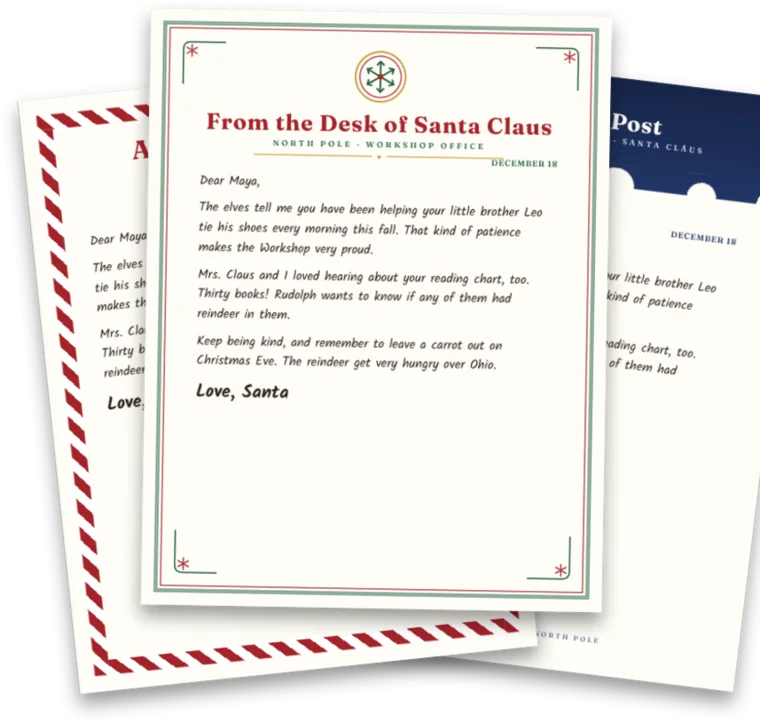
Classic Letterhead has a red-and-green rule, a North Pole crest and snowflake corners. Candy Cane wraps the page in diagonal stripes. Snowy Night uses a navy band with stars and a snow-capped title. All three print on US Letter in color or black and white, and all three are free. Blank versions of the designs are free too, if you would rather handwrite the letter. A letter pack adds six more designs, including Workshop Ledger, Gingerbread and Reindeer Express.
An example letter
Example 1 — classic tone, age 7.
Dear Maya,
The workshop is loud tonight. The reindeer are practicing their landings on the roof and someone keeps dropping jingle bells in the paint. I took a quiet minute to write to you.
I heard how you helped your little brother find his boots on the morning you were already late. That is the kind of thing that makes a whole day easier for everyone in the house.
Keep practicing your reading a little each night. You are further along than you think.
Merry Christmas, Santa
Example 2 — funny, age 9.
Dear Theo,
The reindeer have eaten the packing list. Again. Your request is safe with me, although the page with “bicycle” has a bite mark.
Yours, Santa
Example 3 — toddler, age 3.
Dear Ella,
I saw you put on your own boots. That is a big job for small hands. The reindeer say hello.
Merry Christmas, Santa
Notice what each one does: one named detail, a warm voice and no promise. The wish list is acknowledged rather than itemized back at the child.
When to write and print it
Mid-December is the sweet spot for a letter that arrives by post or turns up under the tree. If the letter is meant for Christmas Eve, print and sign it on December 23 and hide it somewhere flat. Test the printer before the night you need it; a low ink cartridge at 11 p.m. on December 24 is its own kind of Christmas miracle. Keep the page in a folder or between two sheets of card so the corners stay sharp, and print a spare copy in case the first one creases.
Free letters and letter packs
Three free letters a day cover most families. A one-time $4.99 letter pack adds 10 credits — one letter each after the free daily allowance — plus six premium stationery designs, the Nice List certificate generator, elf reply letters, the North Pole envelope template and no footer branding. It makes sense if you are writing for several children or want a certificate and envelope to match the letter. The free tier stays free; the pack is optional.